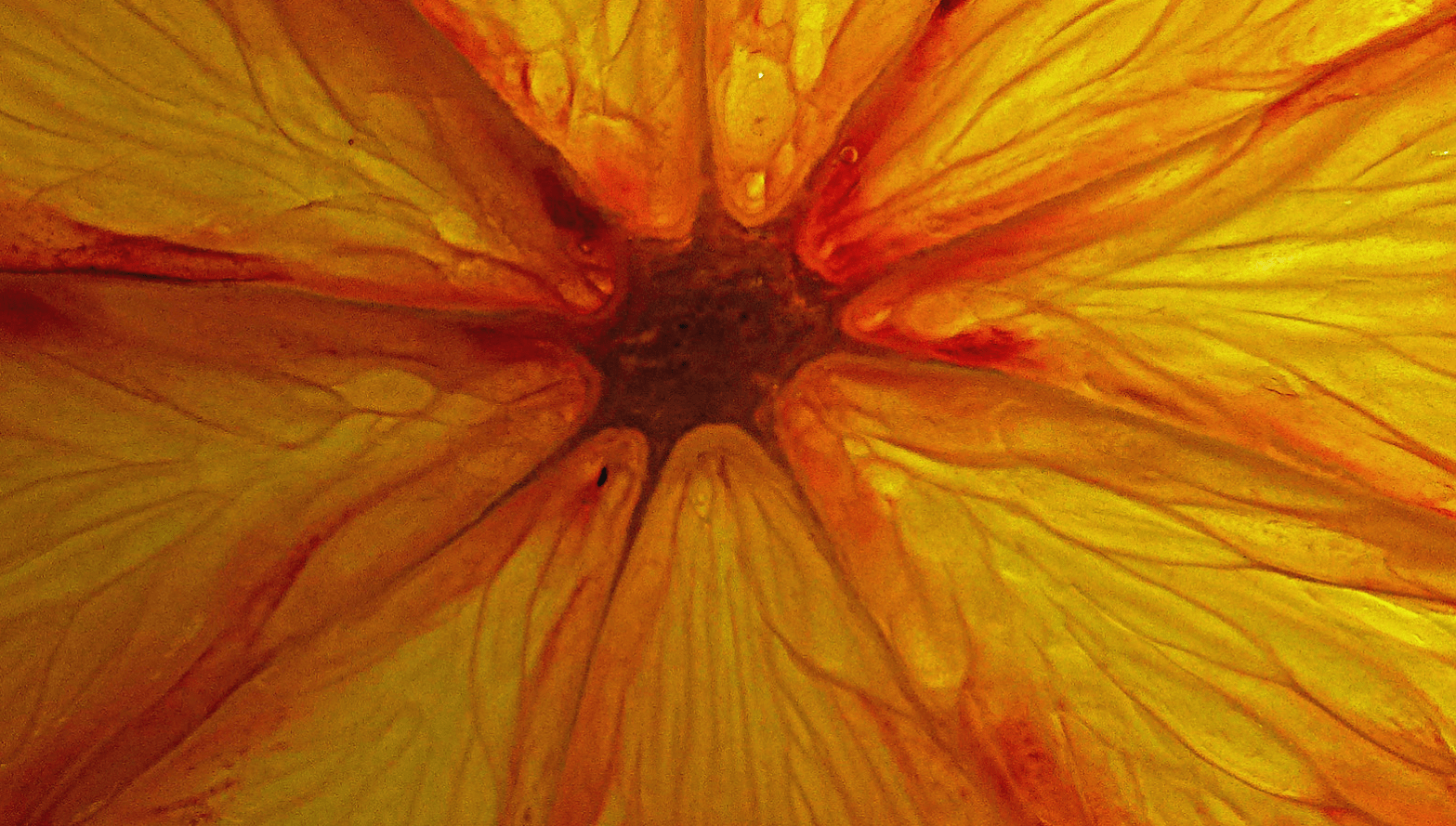
In a literal sense, palimpsest means a manuscript which has been overwritten over time. Thought, meaning, and cultural influences underpin overwriting. These layers of history cannot be ignored.
In literature, art, history, architecture and much more, we see original work overlaid by adaptations or accretions, and changes in meaning or symbolism. So it is with food.
A recipe may stand as emblematic. But it does so rooted in a history of adaptation and survival. Ingredients likewse, tell a story.
Let’s take that of the blood orange as an example.
Oranges originate in the regions where southern China, north eastern India, and Myanmar meet. Complex trade routes by land and sea took this fruit, first farmed around 6000 years ago, to other parts of the world. With trade went culture.
- The name ‘orange’ derives from the Sanskrit word for ‘orange tree’ (नारङ्ग nāraṅga).
- The Sanskrit word travelled to Persia where it became نارنگ (nārang) from where the Arabs derived نارنج (nāranj).
- ‘Orange’ then entered Late Middle English in the 14th-century via the Old French word orenge (as in the phrase pomme d’orenge), itself based on the Arabic nāranj.
- Oxford English Dictionary tells us that the first recorded use in English of orange (for the colour) was in 1512.
From a period well before the earliest ancient Greeks we can see that trade, migration, and cultivation spread language, culture, and ideas about food. Globalisation is not a new phenomenon.
Let’s now journey to Sicily in the early 9th century CE. There, Arab and North African control and culture suffused the island. The story of Sicilian food, architecture, colloquial turns of phrase and more tell that story. Oranges cultivated on mountain slopes were watered by ingenious irrigation systems the incomers developed here and in southern Spain. These oranges, because of their growing conditions, developed a reddish bronze tone to their segments and a rich, raspberry like, flavour. As far as we know, this was the first variety of blood orange which we prize for its taste, aroma, and colour.
From the word to the flesh, a long history is attached to this fruit’s journey. That story spans time, place, and cultures. It is a palimpsest.
The ancient story of the orange conveys a wealth of learning … if we choose to heed its lessons.


