One carries the shadows, the dreams, the fears and the dragons of home under one’s skin.
‘Home’ is ian abiding fascination for me. This may be, in part, because of my family’s experiences of migration, dispossession, displacement and exile … and going further back to stories from the 16th century, of which there is an echo in my bones.
‘Home’, as much by absence as presence, shapes who we are and who we become. In our age of anger, as Pankaj Mishra puts it, ‘Home’ has become weaponised.
We live in a time of artificially forced choices; between having secure borders and compassion, between national loyalty and concern for humanity, between loving our country and caring about people beyond.
Care for humanity or homeland, is to my mind, a mutually reinforcing dynamic. Instead of picking a side or embracing a single allegiance or identity, how about appreciating that we are more complex than that.
To paraphrase Whitman, we “contain multitudes”. We do. Our loyalties overlap. Our identities evolve. We belong in many places at once and over time. Above all, we all belong on this planet, our irreplaceable ‘home’, where we are one part within the whole that we call ‘nature’.
This is not a new idea. It runs deep through the history of human thought. From the ancient Buddhists to Greek philosophers like Diogenes, via early Christian thought and also via Sikh Gurus of the 15th and 16th centuries and their message of absolute equality between peoples. Immanuel Kant argued in the 18th Century that cosmopolitanism was essential to a meaningful moral life, believing that every human being possesses an inherent dignity that deserves equal respect. This is far from a rejection of patriotism.
- We can cherish our culture, our heritage and our country.
- We can feel a deep bond with our fellow citizens.
- We can still recognise our obligations to people beyond our borders.
- We can also be citizens of the world.
Cosmopolitanism is not antithetical to Patriotism.
Whatever labels we use – refugees, migrants or expats, exiles, newcomers, natives, patriots or locals – our lives are deeply connected.
We are not separate stories. We are part of the same story.
As Chimamanda Ngozi Adichie cogently observed in 2009, there is a danger to the single story, the narrative which denies the complexity, humanity, and philosophical life of the other.
Algorithms increasingly sort us into camps. They reward certainty, outrage and division to create a hate economy [this report into how City of Sanctuary UK were targeted is a good example]. By pushing us towards tribes and away from understanding, they create a single story.
But stories can do the opposite.
Through stories, we can create an imaginarium with no passports, frontiers, hierarchies, or imposed dualities.
There is only the invitation to listen, to meet people we might otherwise overlook, hear voices that have been silenced, and perhaps to restore humanity where it has been denied.
Art tells stories.
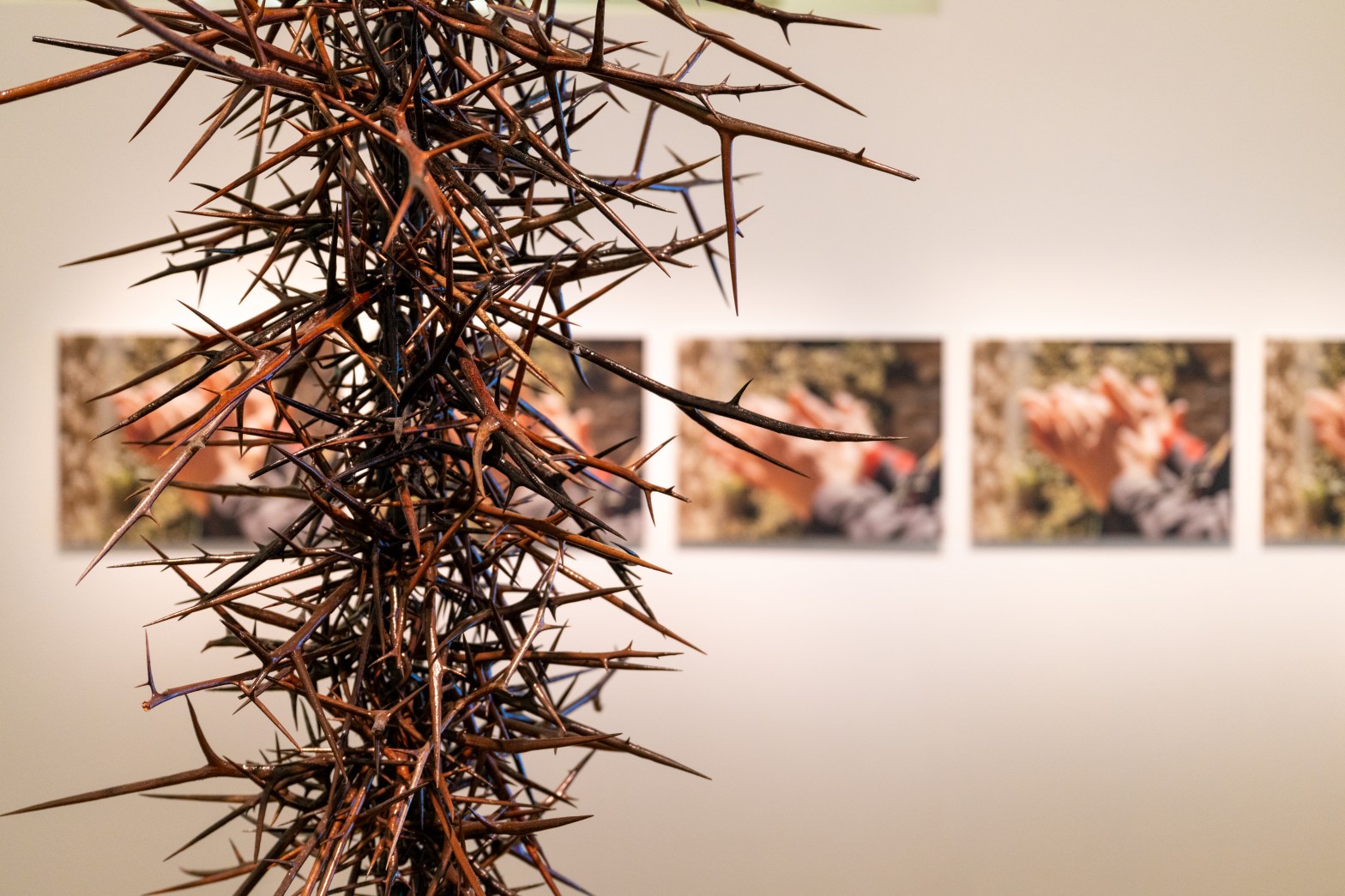
The Lost Paintings at Bristol Museum & Art Gallery shows work by 53 Palestinian and Palestinian diaspora artists. The persistence of memory despite displacement, dispossession and exile is an enduring theme in the stories told here. Through memory as philosophical metaphor, the artists ‘return home’. The art in this exhibition is really very good and the space this exhibition provides helps us to remember a simple truth; our roots are intertwined and our futures are shared.
If, like ripples, we spread our circles of concern without abandoning their source, are we being disloyal to our land? No.
However we define ourselves, we belong to one human family. ‘Home’ is a universal concept, it has an echo in all our bones.
Empathy feels more important than ever if we are to truly try to build social cohesion in this age of anger, and reimagine a better future for us all.


