They used to say, ‘if we build it, they will come’. Not any more, or at least not always. Increasingly, you need to go where people are. What does that mean for buildings based organisations – museums especially? Furthermore how does this impact the way people do the work? It can mean many good things.
Let’s start with the dependencies, the things which may need to be addressed before the doors can be flung open wide.
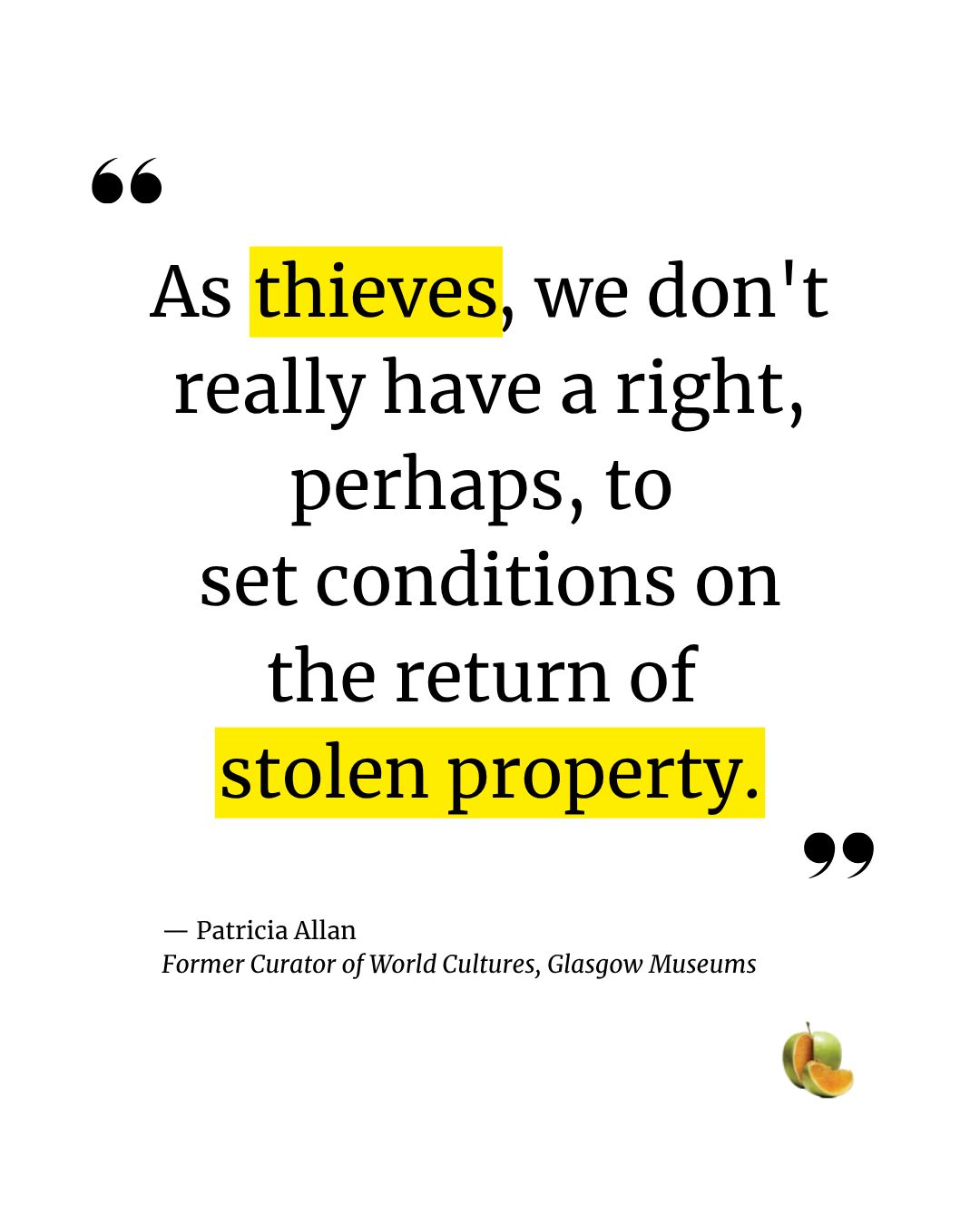
We could talk about restitution for aeons. By acknowledging that much of what sits in museums, especially that which came from cultures in the global south, was stolen, we can cut to the chase.
Restitution means different things to different people; it operates on a sliding scale.
- Some start from a position of nostalgia where restitution would be to ‘rewrite history’ – we know that what they really dislike is the way this draws attention to colonial misdemeanours.
- Others harbour a desire to shift the dial further, faster – for them complete restitution cannot come soon enough.
- Most people mill about the middle in confusion.
Hold that thought.
On 24 August 2022 the Extraordinary General Assembly of ICOM (International Council of Museums) took place in Prague. ICOM adopted a new definition for museums to acknowledge their expanded role in contemporary society.
The new definition stated:
“A museum is a not-for-profit, permanent institution in the service of society that researches, collects, conserves, interprets, and exhibits tangible and intangible heritage. Open to the public, accessible, and inclusive, museums foster diversity and sustainability. They operate and communicate ethically, professionally, and with the participation of communities, offering varied experiences for education, enjoyment, reflection, and knowledge sharing.”
Extraordinary General Assembly of ICOM (International Council of Museums)
What does this mean?
This redefinition shifts the traditional view of museums from collection-based institutions, to active spaces for engagement, education, and cultural sustainability.
So, this brings us to museology as an academic subject that explores the formation, structure, and administration of museums set against an understanding and practice of museology which challenges object-based approaches and emphasises social engagement, education, co-creation, and inclusivity.
- There are merits to both approaches, and arguably one cannot survive without the other.
- What matters is the reconciliation between the two, and the pace of change which flows.
Hold that thought too.
Do we need a museum when people can preserve objects in their own spaces?
By return, I’d ask various questions of my own.
- How many people preserve their objects?
- How many people recognise the value of what they own?
- How many people implement the knowledge their objects hold?
Objects in museums ensure that knowledge is not lost, that history is not forgotten, and that future generations have access to their roots. There are caveats.
Interpretation and the standpoint from which this comes is far from perfect. Top down, ethnocentric and anthropological interpretations are well known, perhaps too well known. Of these, Pitt Rivers Museum has most famously made a clearly presented and intentional journey towards reflecting the sensitivities of international modernity.
As their website states:
“We have approached this holistically and strategically. Over three years, from 2017-2020, [Pitt Rivers’] director, Dr Laura Van Broekhoven, has led a comprehensive and pioneering Internal Review of Displays and Programming from an Ethical Perspective involving both internal staff and external stakeholders, in particular community delegates from different parts of the world but also A-level students and people living in Oxfordshire as refugees or forced migrants.
This review has provided a framework for considering these issues and informed a plan for decolonisation, a process described by the Museums Association as “not simply the relocation of a statue or an object but a long-term process that seeks to recognise the integral role of empire in British museums – from their creation to the present day – that requires a reappraisal of our institutions and their history and an effort to address colonial structures and approaches to all areas of museum work.” We have broadened this approach to include work that embraces hope, reconciliation and redress and focuses on co-curatorial approaches to bring new voices into the Museum and ensure public engagement is led by socially engaged work with communities.”
Now, go back to those thoughts you were asked to hold …
What happens if we reimagine museums as museum-cum-community centres; working spaces which integrate cultural preservation and restitution with community engagement?
Manchester Museum and the newly energised Birmingham Museums provide living examples of what this can look like. There are others too.
These centres serve multiple roles:
- Skill Development & Education: Hosting workshops, interactive storytelling, and cultural engagement on terms set by communities.
- Social Hubs: Encouraging intergenerational conversations and local initiatives.
- Economic Integration: Supporting social and ethical businesses, crafts, heritage tourism, and small creative businesses.
In this practical vision, heritage conservation blends with real-world applications. The result is a museum transformed into a living cultural hub. Community participation ensure museums remain relevant and accessible and loved in an increasingly loveless and fickle modern world.
Don’t believe me?
Which museum won Art Fund Museum of the Year 2026?
Clue: It wasn’t the V&A East Storehouse, National Gallery, Fitzwilliam, or Norwich Castle Museum & Art Gallery.
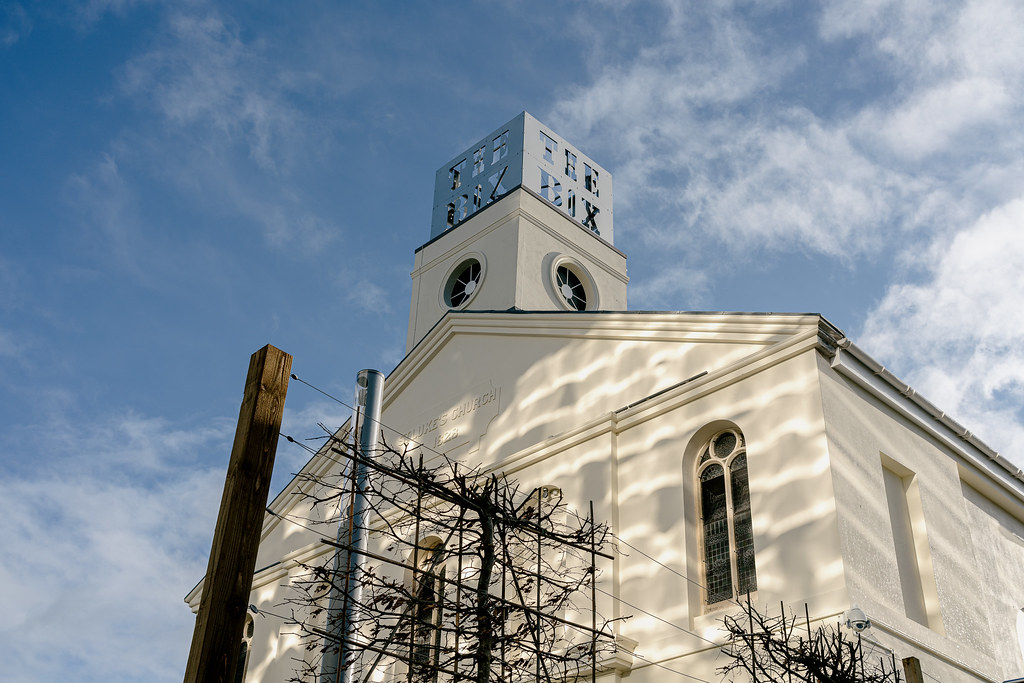
The Box in Plymouth was the winner, because:
“It brings together extraordinary collections, exhibitions and archives under one roof, alongside impactful community work and a deep commitment to access for all.”
Art Fund on The Box, Plymouth: Museum of the Year 2026
The Box, among other museums, has gone where people are. If not literally, it has metaphorically made the journey towards embedding community engagement in everything that it does, and does so with a conviction that resulted in them receiving the world’s largest cash prize for museums. It’s worth noting too that the prize came about as a result of sustained local authority investment in The Box.
Read the room. It’s not either/or. It’s about investing in both, and on an equal footing.


